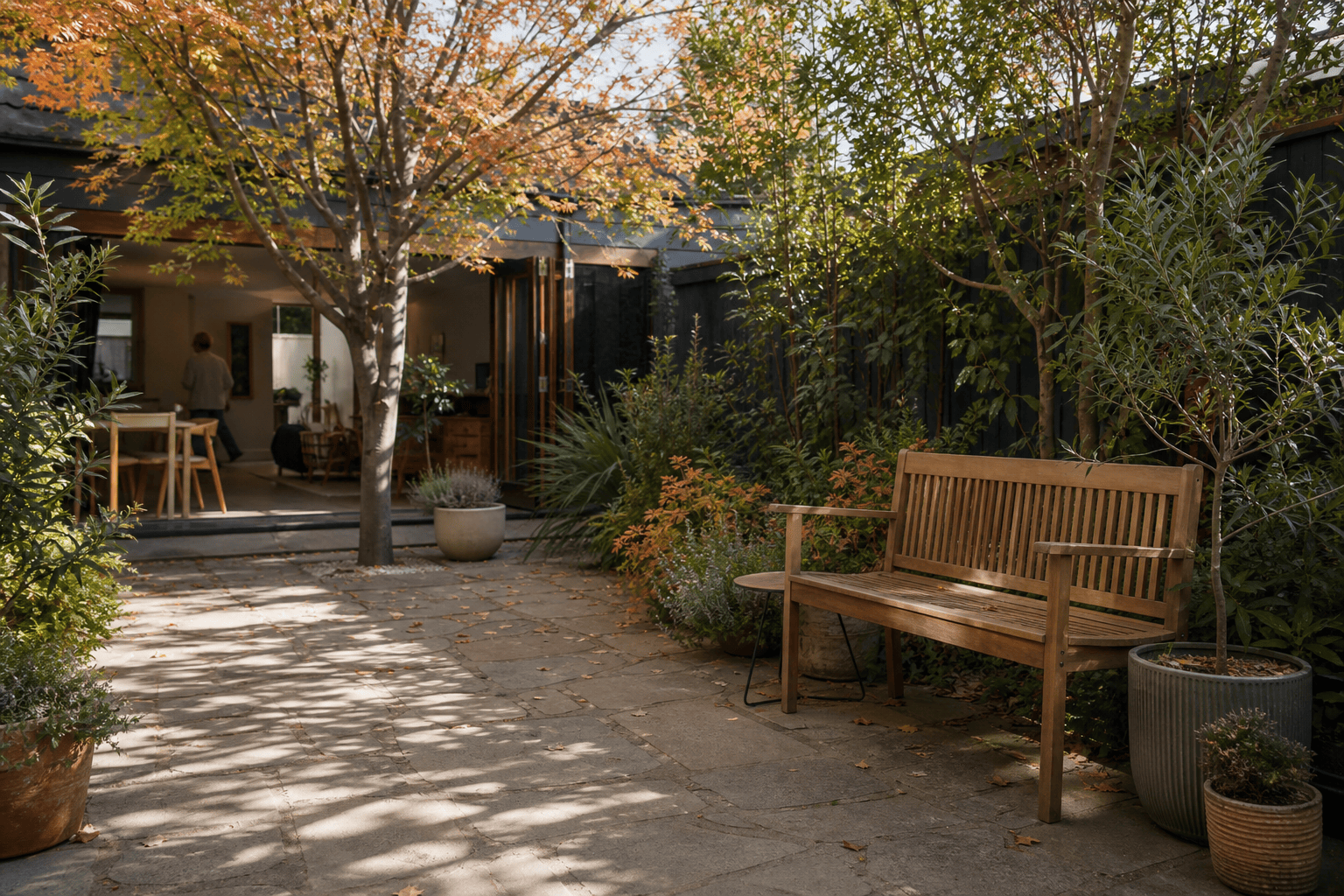
Outdoor Spaces That Work for Victorian Homes
Outdoor space does not have to be large to add value. In Victoria in autumn 2026, buyers and renters were often looking for outdoor areas that felt usable, low-maintenance and connected to daily living rather than simply landscaped for photos.
A courtyard should answer a practical question: where would someone sit, store a bike, dry clothes, keep bins or place a barbecue? If the answer is not obvious, the space can feel like a burden instead of a benefit. Simple zoning with furniture, planters and clear access can help.
Autumn is a useful time to assess shade and drainage. A garden that looks pleasant in mild weather may still need pruning, gutter cleaning, path repairs or attention to pooling water. Buyers notice signs that future maintenance has been ignored.
Low-maintenance does not mean bare. Established planting, mulch, neat edging and healthy lawn can make a home feel cared for. Overly complicated gardens can narrow the buyer pool if they look expensive to maintain.
Storage matters more than decoration in compact homes. A shed, secure side access or a screened bin area can make a townhouse or unit feel more livable. For family homes, buyers often look for safe play areas, sightlines from the kitchen and enough space for pets or children.
For sellers, the goal is to remove distractions before photography. Broken fences, stained paving, dead plants, loose steps and tired outdoor lighting can all pull attention away from the home itself. These fixes are often less dramatic than a new deck, but they can protect confidence.
The strongest outdoor spaces were the ones people could understand immediately. They did not need to be oversized; they needed to feel clean, functional and easy to keep that way.